How to Remove Oil, Rust, and Stains From Your Concrete Driveway and Walkway
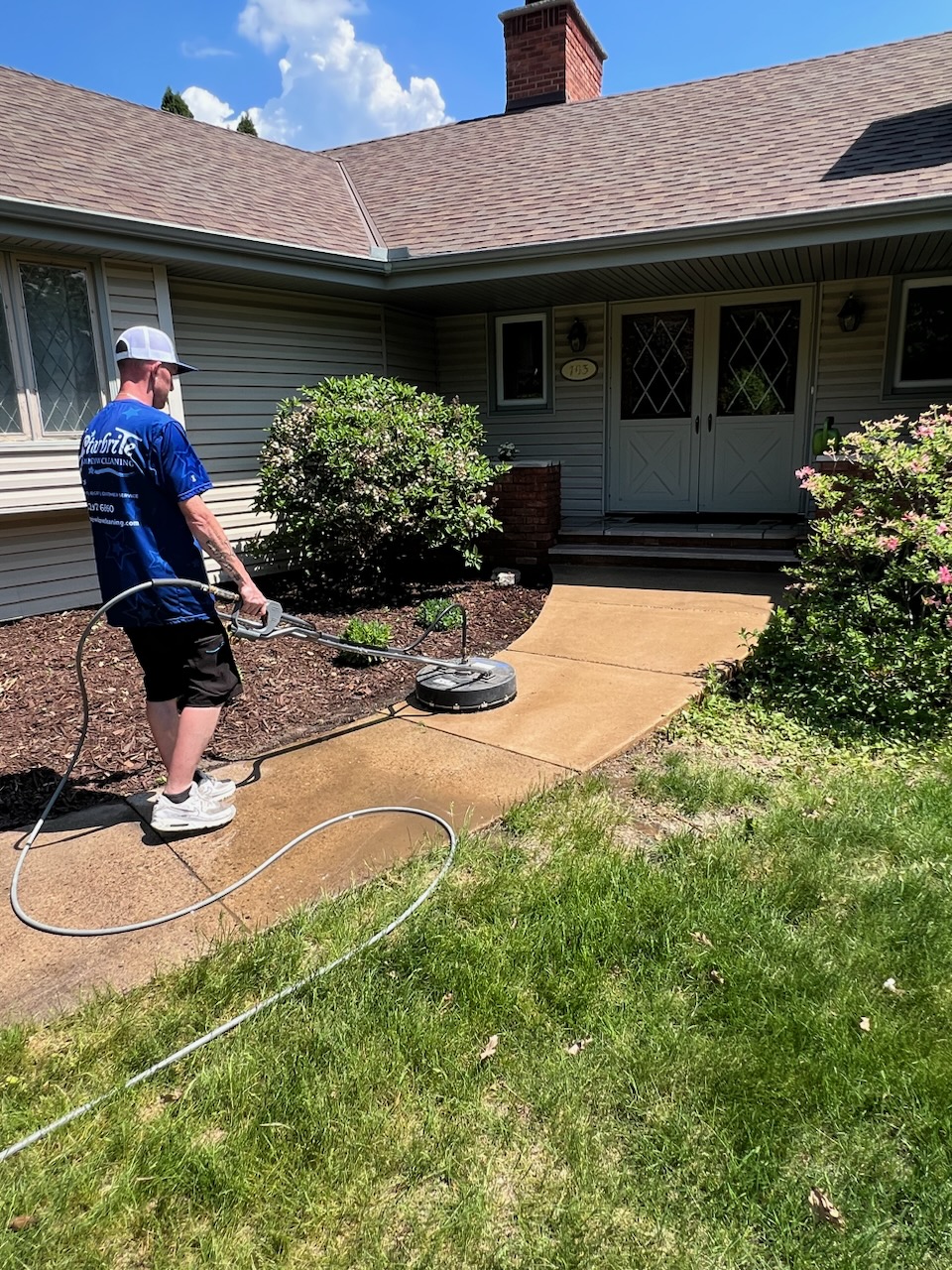
Walk the length of a typical Twin Cities driveway and you will usually find more than one kind of stain: a dark, spreading blotch under where the car sits, an orange-brown ring near the hose bib, black streaks where tires turn into the garage, and a dull greenish haze on the shady side of the walkway. Each mark comes from a different substance soaking into the concrete in a different way, and each responds to a different cleaning approach. Treating them all the same way is the most common reason a homeowner sprays a driveway for an afternoon and still has ghosts of the old stains left behind.
Concrete is porous, not a sealed surface like tile or countertop stone, so whatever lands on it has time to work below the surface before you notice it. Understanding what you are dealing with matters more than reaching for whatever cleaner is under the sink.
Oil is organic and greasy. Rust is iron oxide bonded into the pores of the concrete. Tannins from leaves and tree debris are plant-based dyes. Algae and mold are living organisms feeding on moisture. Salt residue and efflorescence are mineral deposits migrating up through the slab. A degreaser that breaks down motor oil does almost nothing to rust, a rust remover will not touch mold, and pressure alone, without the right chemistry, mostly rearranges surface dirt around a stain instead of pulling it out.
Motor oil and rust stains
Oil stains are usually a dark patch under the spot where a car has sat for a while, or a scattering of smaller drips near where someone changes oil or works on a mower. Fresh oil lifts more easily; old, weathered oil has had seasons of Minnesota freeze-thaw cycles to work it deeper into the pore structure, so it takes the right product, not just more pressure, to pull it back out. A citrus-based or alkaline degreaser applied and allowed to dwell before rinsing breaks the oil down chemically so it flushes out rather than just moving around, and hot water speeds that reaction considerably compared to cold. Rust shows up as an orange-to-brown stain, often in a ring or drip shape, with common Twin Cities sources like iron in well water near a spigot or sprinkler head, fertilizer spilled near a driveway edge, or metal patio furniture left to sweat rust onto concrete over a season. The chemistry is always the same: iron oxide bonded into the surface. Degreasers do nothing for it. Removing it takes an acid-based rust remover or oxalic acid treatment, handled and rinsed carefully to avoid etching the concrete or harming nearby grass and plants.
Tire marks, tannins, and shaded stains
Black scuff marks where tires turn sharply into a garage are rubber transfer, not oil, and usually respond to a good surface cleaner and hot water rather than a chemical treatment. Tannin stains are different: cottonwood fluff, oak leaves, and other debris that sit wet on concrete for days leach tannins that dye the surface yellow-brown, especially in fall when leaf litter collects faster than anyone sweeps it. Shaded, damp areas are also where mold and algae take hold. A cleaner formulated to kill and lift organic growth, not just a pressure rinse, is what actually resolves it rather than knocking the surface film loose for a few weeks.
Salt residue and efflorescence
By spring, a lot of Twin Cities driveways carry a hazy, whitish film that is not dirt at all. Some is residual road salt tracked in over winter. Some is efflorescence, mineral salts within the concrete that dissolve in moisture and migrate to the surface as the slab dries, then crystallize into that chalky bloom. Efflorescence is a symptom of moisture moving through the slab, so if a good cleaning removes the haze but it keeps returning in the same spot year after year, that is worth mentioning to a professional as a possible sign of underlying drainage trouble.
What pressure washing can and can't do on its own
Pressure washing is effective at lifting loose surface dirt, moss, and light grime, and it is a necessary step in almost every stain job because it flushes out whatever the chemical treatment has broken loose. But pressure alone, water and force with no chemistry involved, is not a stain remover. Running a pressure washer over an oil stain or rust ring without the right pre-treatment can clean the surrounding concrete lighter while leaving the stain itself sitting there, making the mark stand out more instead of less. A few things make a real difference in how much a cleaning actually accomplishes:
- Hot water, which dramatically improves how well degreasers break down oil and grease compared to cold tap water alone
- A rotating surface cleaner attachment, which cleans evenly and prevents the visible striping a wand can leave behind
- Letting the right pre-treatment dwell on the stain for the recommended time before rinsing, rather than rinsing immediately
- Matching the chemical to the stain, since a degreaser, a rust remover, and a mold treatment are three different products
- For deep, set-in stains, a poultice treatment that draws the substance out of the pores over a day or more
Sealing after the concrete is clean, and when to call a pro
Once a driveway or walkway is actually clean, sealing it is what keeps the next set of stains from soaking in as deeply or as fast. A quality sealer fills the surface pores so oil beads up long enough to wipe away instead of sinking in overnight, and it slows how much road salt and moisture penetrate the slab each winter, which also helps against the freeze-thaw damage that chips Minnesota concrete over time. Sealer is not permanent, and it only works well going onto concrete that has actually been cleaned first, not sealed over dirt and stains.
Plenty of light staining is a reasonable weekend project with the right products and some patience. But a driveway with old, set-in oil stains, heavy rust, or a walkway collecting shaded mold and tannin buildup for years usually needs commercial-grade cleaners, hot water equipment, and the experience to know which treatment goes where without damaging the concrete or the landscaping around it. If you have tried the DIY route and the stains are still visible, give us a call at (952) 922-6860 or request a quote and we'll take a look and tell you what it will actually take to get it clean.
Related service: Pressure Washing