Bird Droppings, Tree Sap, and Pollen: How to Get the Tough Stuff Off Your Windows
Regular dust and fingerprints come off with any decent glass cleaner and a microfiber cloth. The stuff that actually stumps people is different: bird droppings baked on by an afternoon of sun, a smear of pine pitch from the tree over the driveway, a haze of spring pollen that reappears a day after you wipe it away. Each needs a slightly different approach, and treating them all the same way, usually by scrubbing harder, is how glass gets scratched or etched instead of clean.
The short version: soften before you scrub, match the solvent to the substance, and skip anything abrasive. The longer version, substance by substance, is below.
Bird Droppings: Soak It, Don't Scrape It
Bird droppings are mildly acidic, and the longer they sit in direct sun, the more that acidity can interact with the glass surface and any coatings on it. Fresh droppings wipe away easily. Droppings baked on a west-facing window for a week are a different problem, and the instinct to scrape them off dry with a fingernail, a putty knife, or a razor blade is exactly the wrong move. Dry scraping grinds grit into the glass and can leave fine scratches that show up as a permanent haze in direct light.
Soften it first instead. Lay a wet cloth over the spot and let it sit for several minutes, or spray it with glass cleaner and give it time to soak in before you touch it. Once it's loosened, wipe it away with a soft cloth, working from the edges in. If it's on tempered or coated glass, don't reach for a blade at all, even a plastic one; those coatings scratch more easily than standard glass, and a razor is the single most common way homeowners damage their own windows trying to fix a small problem.
Tree Sap and Pine Pitch
Sap and pitch are sticky by design, which is exactly why soap and water alone won't touch them. What works is a solvent that breaks down the resin without attacking the glass or the trim around it: rubbing alcohol on a cloth, or a purpose-made adhesive and sap remover from the hardware store. Dab it on, let it sit a minute to soften the sap, then wipe with the grain of the smear rather than in circles, which tends to spread it thinner instead of lifting it off. Once the sap is gone, go over the area with a normal glass cleaner to clear any solvent residue, or you'll end up with a faint film that catches the light. In the Twin Cities, this is mostly a problem under maples, oaks, and especially pines, and it's worse near a driveway or patio where branches overhang the glass. If sap keeps reappearing on the same window every season, that's less a cleaning problem and more a trimming one.
Spring Pollen Film and Cottonwood Fluff
Minnesota springs bring a stretch of weeks where a fine yellow-green film settles on every horizontal surface, windows included, and seems to come back the next morning no matter how recently you cleaned. That's because pollen is airborne and constant during peak season, not because your cleaning method failed. A normal wash handles it fine, but during heavy pollen weeks it's worth rinsing the glass with plain water first, so you're not smearing a paste of pollen and soap around the frame.
Cottonwood fluff is a separate nuisance a bit later in the season. It's not sticky on its own, but once rain hits it, it mats down along the bottom edge of the sash and screens and can cement itself in place. Wetting it thoroughly before wiping, rather than brushing it off dry, keeps it from smearing into a gray streak.
Bug Splatter, Spider Webbing, and Paint or Caulk Smears
Bug splatter, common near porch lights and exterior fixtures, dries hard and is mostly protein, so it responds well to the same soak-first approach as bird droppings: wet it, give it a few minutes, then wipe. Spider webbing and the dust it collects usually just needs a dry brush pass before you wash the glass, otherwise you're wetting the dust into the frame corners instead of removing it. Paint overspray from a recent exterior job, construction dust, and silicone or caulk smears left behind by a window or siding install are a step up in difficulty. Small paint specks sometimes lift with a plastic scraper made specifically for glass, used flat and wet, but silicone smears usually need a solvent made for cured caulk, applied carefully and kept away from window seals and rubber gaskets. Sticker residue and old window-cling adhesive respond to the same alcohol or adhesive-remover approach as sap, with warm water to soften the glue first.
What Not to Use on Your Windows
- Razor blades or metal scrapers on tempered, coated, or Low-E glass, which scratches more easily than standard single-pane glass.
- Any dry scraping tool on bird droppings, sap, or bug splatter before the spot has been soaked and softened.
- Abrasive pads, steel wool, or scouring powders, which leave fine scratches you won't notice until direct sunlight hits the glass.
- Ammonia-based cleaners on tinted or coated windows, since ammonia can break down certain window films and coatings over time.
- Harsh solvents or caulk removers applied anywhere near rubber seals, weatherstripping, or vinyl frames, which can dry out or discolor them.
- Pressure washing directly at glass or screens, which can crack panes, force water past seals, or blow out window screens entirely.
Why Exterior Glass Is the Harder Half
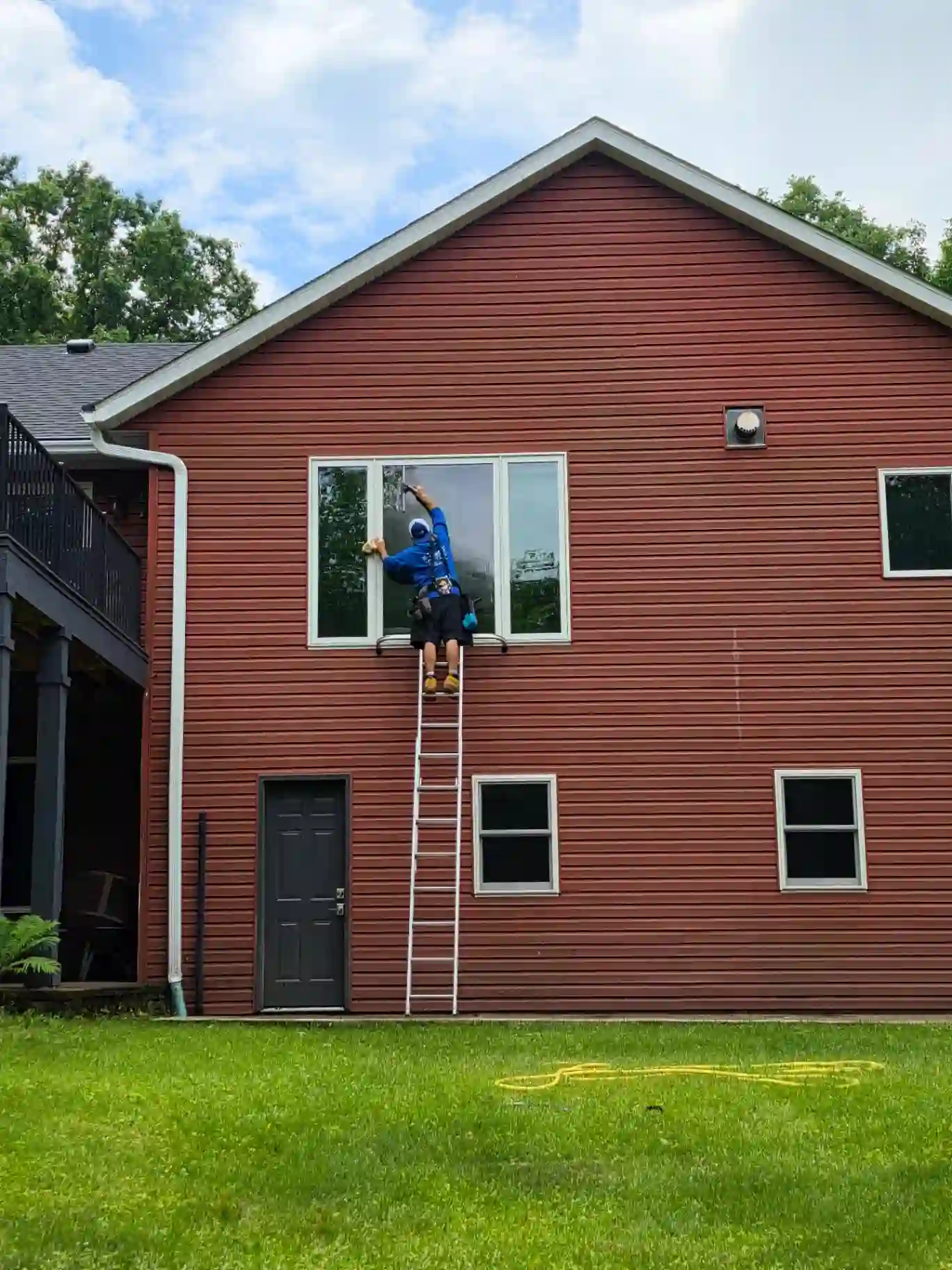
Interior windows collect dust, cooking film, and handprints, which come off with a standard cleaner and a lint-free cloth. Exterior windows take on everything the weather throws at them: droppings baked on by sun, sap and pollen carried by wind, and mineral deposits left behind by sprinklers and rain. They're also harder to reach safely above the first floor, which is why a lot of homeowners handle interior glass themselves and call in help for the outside.
If a stain has been baking on for a season, if it's on a second-story window you'd need a ladder to reach, or if you're not sure what's stuck to the glass, that's a reasonable point to stop guessing and call a pro. We've got the right solvents and technique for each kind of residue, and equipment that gets us to upper-story glass safely. Request a quote or call (952) 922-6860 and we'll take a look.
Related service: Residential Window Cleaning