How Often Should You Wash Your House Siding in Minnesota?
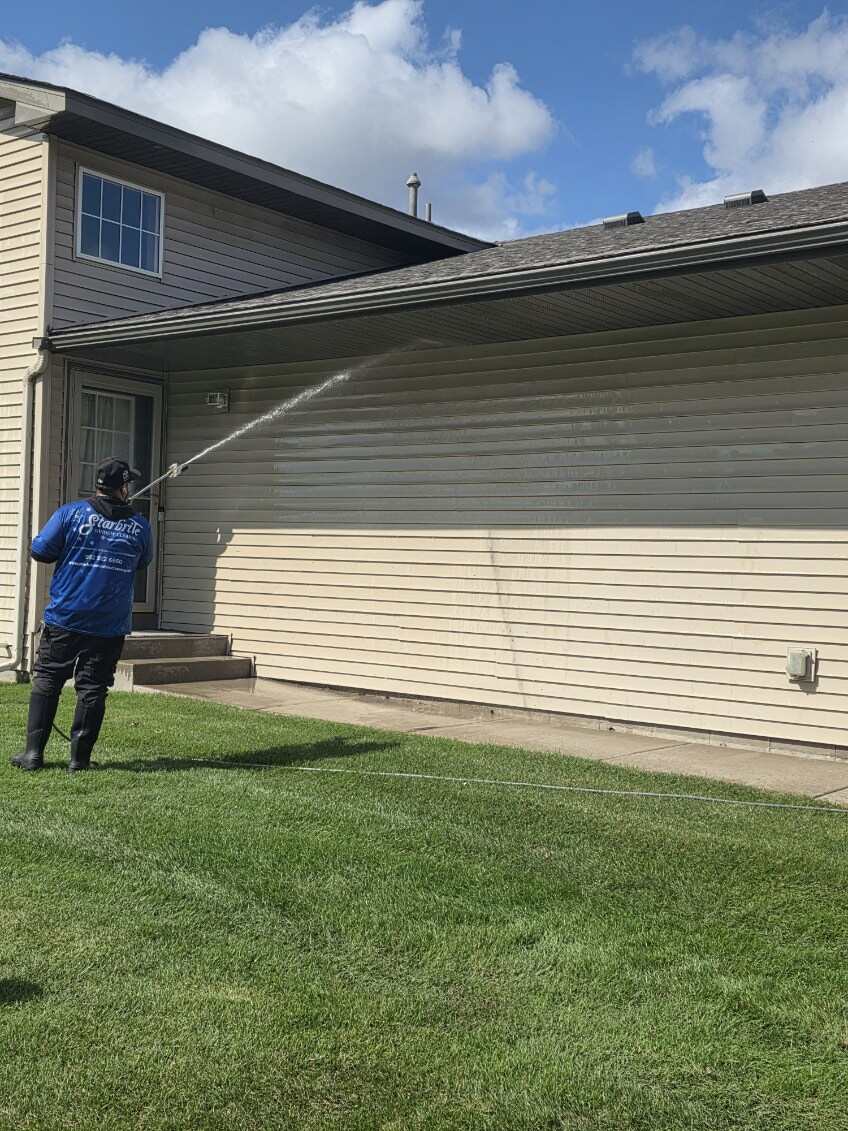
For most homes in the Twin Cities metro, washing siding every one to three years keeps it looking good and protects the finish underneath. That is a wide range on purpose, because siding gets dirty at very different rates depending on where your house sits, what it is made of, and what surrounds it. A house tucked under mature trees on a shaded, north-facing lot might need a wash every year. A sunny, open lot with light exposure on all sides might comfortably go closer to three years between washes.
Rather than treating one to three years as a fixed rule, it helps to know which variables push your home toward the shorter end of that range or the longer end, and which visible signs tell you it is time regardless of the calendar.
What pushes you toward washing more often
A handful of conditions consistently speed up how fast siding gets dirty, and most Minnesota homes have at least one or two of them.
- North-facing walls and shaded sides that stay damp longer after rain or dew, which is where algae and mildew take hold first
- Overhead trees that drop sap, pollen, and cottonwood fluff, or that simply keep a wall shaded and slow to dry
- Proximity to lakes, ponds, or wetlands, where higher ambient humidity keeps siding surfaces damp more of the year
- Gutters that overflow or leak, leaving a dark streak running down the siding below every downspout or clogged section
- Sprinkler heads that hit the wall directly, which both wets the siding on a schedule and can leave mineral deposits over time
- Homes near busier roads, where road dust and winter road salt spray settle onto lower siding sections
How your siding material factors in
The material itself matters almost as much as the location. Vinyl siding is common across the metro and holds up well, but its texture gives algae and grime plenty of surface area to grip, so it often needs washing on the more frequent end of the range. Fiber cement, including brands like LP SmartSide, is more porous than vinyl and can hold onto dirt and mildew a little more stubbornly once it sets in, which is worth keeping ahead of. Aluminum siding sheds surface dirt fairly easily but can show chalking as its finish ages, which washing helps manage. Painted wood siding is the material most worth staying on top of, since trapped grime and moisture against a wood surface can accelerate paint failure and, eventually, wood damage underneath. Stucco tends to show dirt differently, often as an overall dulling rather than streaking, and benefits from the gentler end of a soft wash approach.
Color plays a role too. Darker siding hides dirt longer to the eye but shows chalky residue and fading more noticeably once it does appear, while lighter siding shows green and black staining sooner but tends to look dramatically better the moment it is washed.
Signs it is time, regardless of the schedule
Calendars are a starting point, but your siding will usually tell you when it is ready before a set interval rolls around. A few signs to watch for.
- A green tint building up along the bottom few feet of siding, especially near sprinklers, downspouts, or shaded foundation plantings
- Dark streaks running down from under windows or along roof lines, often from gutter overflow or roof runoff
- Spider webs and small nests collecting in corners, under eaves, or around light fixtures
- A chalky residue that rubs off on your hand when you run it across the siding, which is a sign of both dirt buildup and aging finish
If you are already dealing with visible black streaks or green mold and want the details on getting that specific staining off, we have covered that topic in depth elsewhere on the site. The short version here is just that a regular washing schedule is what keeps you from getting to that point in the first place.
Best time of year to wash siding in Minnesota
Late spring through early fall is the sweet spot for most Twin Cities homes. Waiting until after the bulk of spring pollen has settled and cottonwood fluff has passed means you are not just knocking dirt loose to have it recoated within a few weeks. Washing before the first hard freeze in fall is worth it too, since a clean, dry exterior heading into winter fares better than one going into the cold with a season of grime already worked into the surface. We generally avoid washing once temperatures are consistently near or below freezing, both for the safety of the crew and because water on siding in freezing conditions is more of a problem than a solution.
Why staying on a regular schedule matters
Regular washing is not just cosmetic. Algae, mildew, and trapped dirt hold moisture against your siding, and moisture sitting against paint, wood, or fiber cement over time is what leads to premature finish failure. Many siding manufacturers also specify some form of regular cleaning as part of maintaining a product warranty, so a wash every couple of years can be part of protecting that coverage, not just part of keeping the house looking presentable from the curb. We use a soft wash approach on siding, which we have also written about separately if you want the details on why that method is the safer choice over high-pressure washing for most siding types.
Getting your siding on a schedule
If it has been a couple of years since your siding was last washed, or you are noticing any of the signs above, it is a good time to get an estimate. Request a quote and let us know a bit about your home's exposure and siding material, or call (952) 922-6860 and we can help you figure out a wash schedule that actually fits your property instead of guessing at it.
Related service: Siding Cleaning