How Clean Gutters Prevent Ice Dams in Minnesota Winters
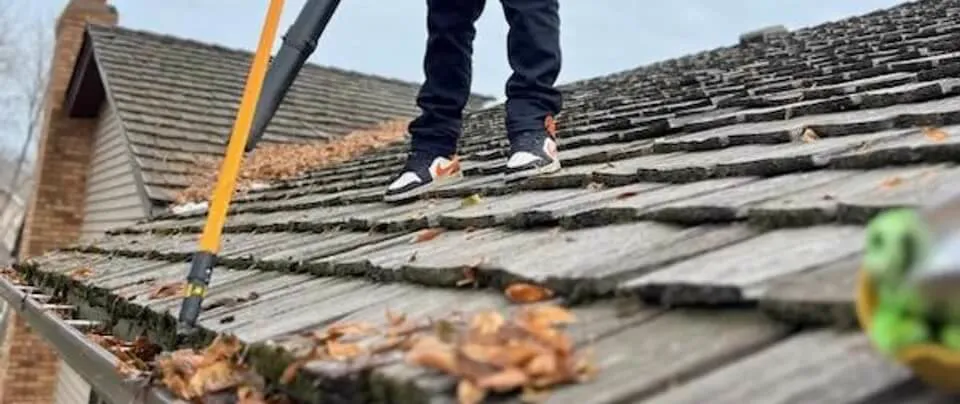
Clean gutters don't prevent ice dams on their own — but clogged ones make them worse, and often turn a manageable winter into an expensive one. That's the honest version of an answer you'll see oversimplified all over the internet. Ice dams start with heat escaping into your attic and snow melting on the roof. What happens next, though, depends heavily on whether the meltwater has anywhere to go. If your gutters are packed with frozen leaves come December, that water has nowhere to drain, and it starts building ice right at the edge of your roof. If you own a home in the Twin Cities, this is worth understanding before the first hard freeze, because the window to do anything about it closes fast.
What an Ice Dam Actually Is
An ice dam is a ridge of ice that forms along the lower edge of your roof and blocks melting snow from draining off. It looks harmless — sometimes even pretty, with icicles hanging off the front — but the damage happens behind it, where you can't see anything at all.
The mechanism is straightforward. Warm air leaks from your living space into the attic. That warmth heats the underside of the roof deck, and the snow sitting on the upper roof begins to melt from below, even when it's ten degrees outside. The meltwater runs downhill under the snowpack until it reaches the eaves — the part of the roof that overhangs the exterior wall and has no heated space beneath it. That section stays cold. The water hits it and refreezes. Do that for a few days and you've got a solid ridge of ice sitting where your gutter is.
Once the dam exists, every subsequent melt cycle backs water up behind it. Water pools on the roof, works its way sideways and upward under the shingles, and finds the sheathing. Shingles shed water running downhill; they were never designed to hold back standing water. From there it's into the roof deck, the insulation, the wall cavity, and eventually the ceiling drywall. By the time you spot a brown stain in the corner of a bedroom, water has been in that assembly for weeks.
Where Gutters Fit Into the Picture
Here's the part people get backwards. A clean gutter is not what stops an ice dam from forming — the temperature of your roof deck is. But a clogged gutter reliably makes an ice dam form sooner, grow larger, and cause more damage. Three reasons:
- A gutter packed with wet leaves freezes into a solid block early in the season, giving ice a ready-made foundation to build on right at the roof edge
- Blocked downspouts mean the meltwater that does drain has no exit path, so it backs up into the trough and freezes there instead of leaving your roofline
- Clogged gutters overflow before winter even starts, saturating the fascia and soffit — wet wood freezes, and water-damaged fascia is far less able to hold a gutter full of ice
- The combined weight of soaked debris plus trapped ice regularly pulls gutter runs loose from the fascia board, which is a repair on top of the water damage
- Debris trapped at the eave holds moisture directly against the shingle edge all winter, shortening the life of the roof at exactly its most vulnerable point
Think of it this way: a clear gutter and open downspout give meltwater a path to the ground during every thaw. A packed one is a shallow ice tray bolted to the edge of your roof.
The Full Fix Is Bigger Than Gutters
We'd rather tell you the whole truth than sell you a service that only solves part of it. If you have chronic, severe ice damming in the same spot every year, gutter cleaning alone won't end it. The root cause is heat loss into the attic, and the real fixes are insulation and ventilation:
- Air sealing — closing the gaps around recessed lights, bath fans, plumbing stacks, and the attic hatch where warm air leaks upward
- Attic insulation — Minnesota code calls for roughly R-49, and a lot of older metro homes are sitting at half that
- Ventilation — soffit and ridge vents that keep the underside of the roof deck close to outdoor temperature
- Ductwork and exhaust fans that vent outside the house rather than into the attic
- Clean, free-draining gutters and downspouts that carry the meltwater away when a thaw comes
That last one is the piece we handle, and it's also the cheapest and fastest item on the list. Insulation work is a bigger project you may schedule over a year or two. Clearing your gutters is a single afternoon that measurably reduces how bad the winter gets in the meantime.
Timing Is Everything in the Twin Cities
This is the part that catches homeowners every year. There's a narrow window when fall gutter cleaning is both possible and useful — after the last leaves have come down, and before the debris in your gutters freezes solid. In the metro that's usually late October into mid-November, and it moves around with the weather.
Go too early and you're doing it again in three weeks because half the leaves were still on the trees. Wait too long and the debris is frozen into a plug that can't be removed without risking damage to the gutter itself — at which point the honest recommendation is to leave it alone until spring and manage the winter as best you can. Every homeowner in the Twin Cities wants this job done in the same three-week stretch, so schedules fill. If you know you want it done, get on the calendar in September.
What Not to Do Once Ice Has Formed
If a dam is already there, resist the urge to attack it. Chipping at ice with a hammer, hatchet, or shovel is the fastest way to put a hole in your shingles, and the shingles are brittle in the cold. Rock salt and de-icing chemicals dumped on the roof will corrode gutters, flashing, and fasteners and kill the plantings below. Pressure washing a frozen roof is worse than it sounds.
A roof rake used from the ground to pull snow off the lower three or four feet of roof is the safest thing a homeowner can do, and it genuinely helps by removing the fuel for the next melt cycle. Beyond that, ice dam removal is steam work best left to people who do it for a living, and never something to attempt from a ladder set on ice.
What We Do When We're On Your House
A real gutter cleaning is more than scooping out leaves. Our crews clear the debris by hand and haul it away instead of dumping it in your beds, flush the troughs so we can watch water actually move, confirm every downspout runs free and clear it when it doesn't, and check the hangers, seams, and fascia while we're up there. That last part is what saves people money — a loose hanger or separating seam is a two-minute observation in October and a carpentry bill in February. We'll tell you what we see either way.
Ladder work in wet fall conditions is also where most DIY exterior injuries happen. Our crews are OSHA trained, and Starbrite is fully insured and licensed, so nobody's balancing on a ladder in your yard hoping it holds.
Starbrite Window Cleaning has been family-owned, minority-owned, and locally owned in Blaine since 1988. We've cleaned more than 12,000 homes and 2,000 commercial properties across the Twin Cities metro — Anoka, Hennepin, Ramsey, Washington, Dakota, and Scott counties. We're BBB A+ accredited, accredited since 2012, and our crews carry OSHA, IWCA, and BRC Aerial Lift certification. If you've had ice dams in the same spot for a few winters running and want a straight answer about whether your gutters are part of the problem, call us at (952) 922-6860 or request a quote. It's free, and there's no pressure attached to it.
Related service: Gutter Cleaning