How to Clean and Restore a Weathered Deck Before Staining
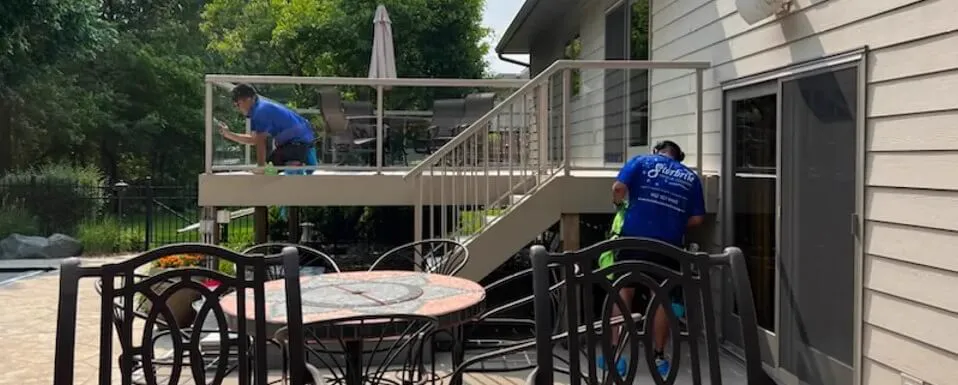
If your deck has gone gray, staining over it without cleaning first is one of the most common and avoidable mistakes Twin Cities homeowners make. Gray, weathered wood isn't just dirty on the surface. Sun and moisture have broken down the top layer of wood fibers, mildew has taken hold in shaded, low-lying spots, and whatever stain was applied years ago is probably flaking or wearing unevenly. New stain over that mess doesn't bond to solid wood, it bonds to dirt and old failing finish, and it shows within a single Minnesota winter.
Restoring a deck right means cleaning it, sometimes brightening it, occasionally stripping it, and giving it real time to dry before any stain goes on. Skip a step and the job looks patchy or peels early.
Why a Gray, Weathered Deck Needs More Than a New Coat of Stain
Wood turns gray because ultraviolet light breaks down lignin, the glue that holds wood fibers together, and rain washes the loosened fibers away. What's left is a thin, damaged layer that doesn't accept stain evenly, plus whatever dirt, pollen, sap, and mildew have settled into the grain over a season or two of Minnesota humidity. Mildew especially loves the north side of a deck or any spot that stays damp under overhanging branches, and it will bleed through new stain if it isn't killed and removed first. Cleaning removes the contamination and dead fiber so stain has clean, sound wood to grip.
Cleaner, Brightener, or Stripper: Knowing Which One You Need
These three products solve different problems, and using the wrong one wastes a weekend. A deck cleaner is a mild, usually oxygenated solution that lifts dirt, algae, and mildew without changing the wood's color, right for a deck that's dirty but structurally fine underneath. A brightener, typically an oxalic acid solution, goes further: it neutralizes tannins and the gray layer itself, pulling wood back toward its natural color and opening the grain so stain absorbs evenly. Most older decks get a cleaner first, then a brightener. A stripper is the heaviest option, used only when old solid-color stain or paint is peeling and has to be fully removed.
Why Low Pressure Beats High Pressure on Cedar and Pressure-Treated Pine
It's tempting to think a pressure washer on full blast speeds things up, and it will strip a deck fast. The problem is what it strips along with the dirt. Cedar and pressure-treated pine are relatively soft woods, and a tight, high-pressure stream will fur the grain, gouge the surface, and etch lines that no amount of sanding fully erases, and the damage is permanent. The better approach is low pressure, generally under 1,000 to 1,200 PSI, with the cleaning chemical doing the actual work of breaking down dirt and mildew. The pressure washer's job is to rinse, not blast, and a wide fan tip held at a consistent distance protects the wood while still getting it clean.
Composite Decking Gets Cleaned Differently
Trex and other composite decking don't need brighteners or stain, but they aren't maintenance-free. Composite boards develop a chalky, oxidized film, plus pollen and algae buildup in the grain pattern, especially on boards with a wood-grain texture that holds grime. Cleaning composite calls for a soft-bristle approach or very low pressure with a composite-safe cleaner, since aggressive pressure washing wears away the protective cap layer and leaves permanent dull streaks. Oxalic acid brighteners and strippers, made for real wood, have no place on composite and can discolor it. The goal is a gentle wash that lifts grime without touching that outer shell.
How Long to Let Your Deck Dry Before Staining
This is the step most homeowners rush, and it ruins the most stain jobs. After cleaning and rinsing, wood needs to dry all the way through, not just on the surface, before stain will bond correctly. Depending on temperature, humidity, sun exposure, and wood density, that's typically 24 to 72 hours in good drying weather and can stretch to 3 to 4 days if it's cool, shaded, or humid, which describes a lot of early summer mornings here. The reliable check is the water droplet test: sprinkle water on the boards. If it beads up, the wood is still holding moisture. If it soaks in within a minute or two, it's dry enough to stain. Don't guess by how the surface looks or feels. A deck can look dry and still be damp underneath.
Timing It Right in a Minnesota Season, and Fences Too
The best cleaning and staining window here runs roughly late May through September, once overnight temperatures stay reliably above 50 degrees and before fall's shorter days slow drying too much. Plan around the weather, not the calendar: you want a stretch with no rain forecast for at least 24 to 48 hours after cleaning, and ideally another dry window after staining. Direct, blazing sun isn't ideal either, since it dries stain too fast and causes lap marks, so late morning through early evening in partial shade is often the sweet spot. Fences follow the same logic as decks, since they're the same materials facing the same weather: clean or brighten as needed, rinse at low pressure, let the wood dry fully, and check with the water droplet test.
- Identify the wood: cedar, pressure-treated pine, or composite, since each calls for a different cleaning approach.
- Clear the deck of furniture, planters, and grills before cleaning begins.
- Apply a deck cleaner to break down dirt, algae, and mildew, then rinse at low pressure.
- Follow with an oxalic acid brightener on gray, weathered wood to restore natural color and open the grain.
- Reach for a stripper only if old solid-color stain or paint is peeling and needs full removal.
- Let the deck dry 24 to 72 hours or longer in cool or humid weather, checking with the water droplet test.
- Stain during a stretch with no rain in the forecast for 24 to 48 hours before and after.
- Treat fences with the same clean, brighten, dry, and stain sequence.
A weathered deck can usually come back close to new, but getting there takes the right product for the wood, low pressure instead of brute force, and patience on the drying end. If your deck or fence needs more than a garden hose can handle, Starbrite Window Cleaning cleans decks and fences throughout the Twin Cities metro using cleaners and brighteners matched to the wood. Request a quote or call us at (952) 922-6860.
Related service: Deck & Fence Cleaning