Can You Pressure Wash Windows? Why the Pros Say No
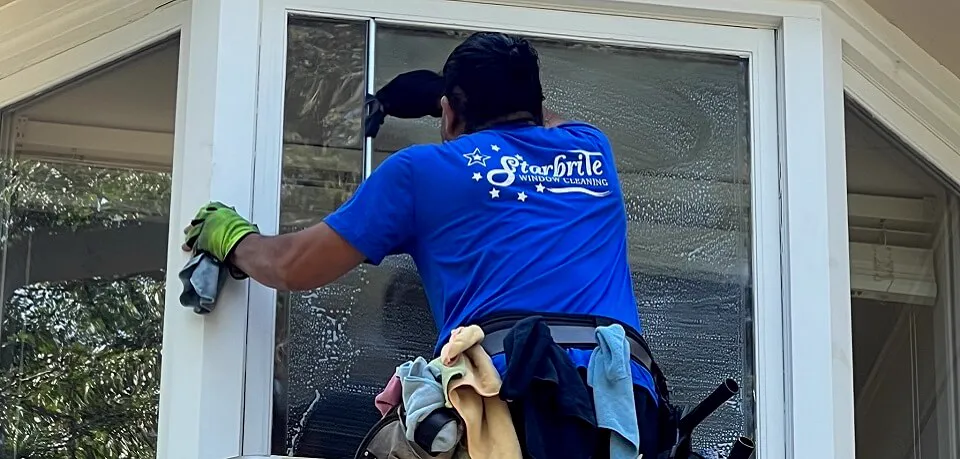
You technically can point a pressure washer at a window, but you shouldn't. High-pressure water can push past the seals on double-pane glass, force water into the wall behind the frame, tear screens, and strip paint or caulk. And it still won't leave the glass truly clean, because pressure alone doesn't remove the film that makes windows look hazy.
That's the short answer we give Twin Cities homeowners who ask whether we "just power wash the windows." We don't. Below we explain what can go wrong, where low-pressure rinsing does have a place, and how professional window cleaners actually get glass streak-free without risking your home.
Why High Pressure and Windows Don't Mix
A garden hose puts out a gentle stream. A typical homeowner pressure washer puts out many times that force, concentrated into a narrow jet. Glass itself is fairly tough, but a window is not just glass. It's a system of seals, gaskets, weep holes, caulk, and frame joints designed to shed rain falling from above, not water blasted at it sideways from a few feet away.
Here's what we see go wrong most often when someone pressure washes their windows:
- Broken seals on double- and triple-pane windows. The seal that holds the insulating gas between the panes can be weakened by a direct jet. Once it fails, moisture gets in and you get permanent fogging between the panes that no cleaning can fix.
- Water forced into the wall. High pressure drives water past weatherstripping and through gaps around the frame, into the sill, the framing, and the insulation. That's how rot and mold start out of sight.
- Torn or bent screens. Window screens are thin mesh in light frames. A pressure washer can rip them or pop them out of their tracks in a second.
- Damaged caulk, paint, and trim. Older wood windows, glazing putty, and painted trim can be stripped or gouged. On homes built before 1978, chipped paint may contain lead, which you never want sprayed around your yard.
- Voided warranties. Many window manufacturers warn against pressure washing in their care instructions, so damage may not be covered.
Why Minnesota Windows Are Extra Vulnerable
Our climate puts more stress on window seals than milder parts of the country. Twin Cities windows go through big temperature swings from summer heat to deep winter cold, and every swing makes the frame and seals expand and contract. Over the years that wears seals down, so many homes in Blaine, Coon Rapids, Maple Grove, and Woodbury already have seals that are older and less forgiving than they look.
Water forced into a wall in the fall is a bigger problem here, too. If it doesn't dry out before a hard freeze, it can freeze in the sill or framing and cause damage that shows up in spring. That's one more reason we never put high pressure on glass, especially late in the season.
If you already see fogging between the panes, that's a seal failure, not dirt. We explain what causes it in our article on why windows look foggy after cleaning.
Doesn't Pressure Washing Get Windows Clean?
Not really. Even when nothing breaks, pressure washing usually leaves windows looking worse than people expect. Here's why:
- Dirt on glass is a bonded film, not loose dust. Pollen, road grime, and oxidation stick to the surface and need a cleaning solution and gentle agitation to lift off.
- Tap water leaves spots. Much of the Twin Cities metro has hard water. When it dries on glass in the sun, it leaves mineral spots that can be harder to remove than the original dirt.
- There's no squeegee step. Without wiping the glass dry, water just runs down in streaks and dries where it lands.
So you take on the risk and still end up with spotty glass. That's the worst of both worlds.
When Low Pressure Is Okay
There is a difference between a pressure washer and soft washing. When we clean siding with a soft wash, we use a low-pressure spray and a cleaning solution, not a high-pressure blast. Windows on that wall will get wet, and that's fine. A gentle, low-pressure rinse that mimics a good rain won't hurt a window that's in good shape.
The key is low pressure, a wide spray, distance from the glass, and never aiming directly at seals, frame joints, or vents. Even then, the windows will need a proper cleaning afterward to remove spots and leftover residue. That's why we usually schedule window cleaning after a siding wash or pressure washing job, not before.
How Professional Window Cleaners Actually Do It
Professional window cleaning is mostly careful handwork. On a typical home visit, our crew will:
- Remove and clean screens separately so they don't get damaged and don't drip dirt back onto clean glass.
- Scrub each pane with a soft applicator and a gentle cleaning solution to break down the film.
- Squeegee the glass dry and detail the edges with a lint-free towel, so no water dries into spots.
- Wipe down sills and frames and use safe ladder or extension pole methods for second-story glass.
- Use specialized treatment for hard water staining when needed, instead of trying to blast it off.
It takes longer than a quick spray, but it's safe for your seals and it's the only way to get glass that's actually clear. That's how we've done it in Blaine and across the Twin Cities since 1988.
What to Do Instead if You Want to DIY
If you'd like to clean ground-floor windows yourself, skip the pressure washer and grab a bucket instead:
- Rinse loose dust with a garden hose on a gentle setting.
- Wash with a soft scrubber and a few drops of mild dish soap in warm water.
- Squeegee from top to bottom, wiping the blade after each pass.
- Dry the edges with a microfiber towel, and work in the shade so the glass doesn't dry too fast.
For second-story windows, skylights, or anything that needs a tall ladder, it's worth calling a pro. Falls from ladders are a real risk, and our crews are OSHA, IWC, and BRC Aerial Lift certified for exactly this kind of work.
Frequently Asked Questions
Can I pressure wash my window screens? We don't recommend it. Screens tear and bend easily. Lay them flat, wash gently with soapy water and a soft brush, and rinse with a garden hose.
Will pressure washing my siding damage my windows? It can if high pressure hits the glass or frames directly. That's why we soft wash siding at low pressure and keep the spray off seals and frame joints. Plan to have the windows cleaned after the siding is done.
What do professionals use to wash windows? Mostly simple tools used with skill: a soft scrubber, a gentle cleaning solution, a quality squeegee, lint-free towels, and extension poles or ladders for height. Some pros use purified-water pole systems for certain jobs, but none rely on high-pressure spray.
Get Your Windows Cleaned the Safe Way
Starbrite Window Cleaning is family-owned, minority-owned, and locally owned in Blaine since 1988. We're BBB A+ accredited since 2012, fully licensed and insured, and we've cleaned more than 12,000 homes and 2,000 commercial properties across Anoka, Hennepin, Ramsey, Washington, Dakota, and Scott counties.
If your windows need more than a hose can handle, let us take care of it. Click Request a Quote or call (952) 922-6860 for a free, no-pressure quote on our residential window cleaning service.
Related service: Residential Window Cleaning